
Why most traders read accumulation wrong
Many traders open a chart and run into a situation where price stops moving confidently up or down. Instead of a clear trend the market starts moving inside a limited range, and working out the direction from here becomes practically impossible.
Most of the time such sections get called an ordinary sideways market. Many people think the market is "doing nothing" at that moment, and this is exactly where one of the most common mistakes is made. In reality it is precisely in this period that a process takes place which has a decisive influence on the move that follows.
📈 What the accumulation phase is
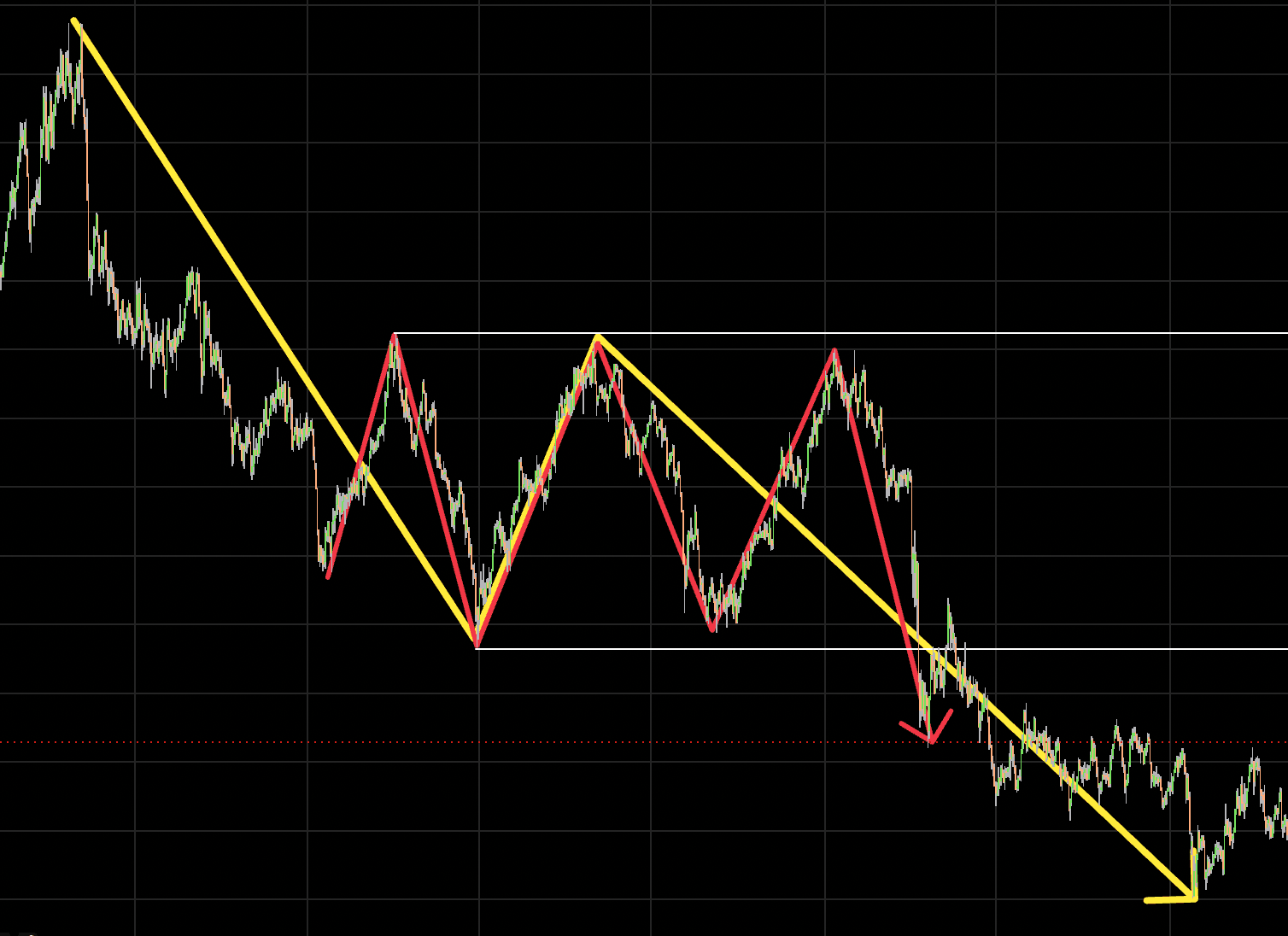
The accumulation phase, or accumulation zone, is a section of the chart where, on your chosen working timeframe, it is impossible to determine the direction of the next move with sufficient probability.
Outwardly such a section looks like price moving inside a limited range. That is exactly why most market participants mistakenly read it as an absence of activity.
But the absence of a strong trend does not at all mean the absence of work by large market participants. On the contrary, it is precisely at this moment that positions are being built which later become the reason for a powerful impulsive move.
💰 Why accumulation is the basis of every trend
No impulse begins by accident. Before price starts moving actively up or down, the market goes through a stage of accumulation.
It is after this phase ends that a trend move appears. Some market participants get the chance to move their trades to breakeven or take profit, while others start actively pushing price towards their targets.
So an impulse is a consequence of accumulation, not a phenomenon in its own right. Once you learn to identify accumulation zones properly, it becomes significantly easier to understand the logic behind how a future move in price forms.
🎯 What understanding the mechanics of accumulation gives you
For most retail traders there is an important limitation.
We cannot influence price ourselves. Our trade size is far too small to change the direction of the market.
That is exactly why a trader's main job is not trying to guess the moves inside the accumulation, but finding the moment when it becomes clear which way the large participants are starting to act.
This approach lets you give up random entries and concentrate on trades with a higher probability of working out.
🚀 Why the break of an accumulation matters so much
The most important event is the break of the boundaries of the accumulation zone.
It is after price leaves the range that has formed that you get the chance to join positions the large market participants have already built.
Working after a confirmed break lets you:
avoid trading inside uncertainty; understand the logic of the move in price; follow the actions of large market participants; improve the quality of your entry points; cut down the number of unjustified trades.
This approach makes trading more systematic and helps you make decisions based on the behaviour of price rather than on emotion.
✅ Conclusion
The accumulation phase is one of the most important elements of technical analysis. It is in this period that the foundation of the future impulse is laid, which later turns into a trend move.
Most market participants do not give accumulation the attention it deserves, treating it as an ordinary sideways market. Yet it is precisely understanding the mechanics of accumulation that lets you stop fighting the market and start working with it.
Since a retail trader cannot move price on their own, the most rational decision is to wait for a confirmed break of the boundaries of the accumulation and join the move formed by the large market participants. This approach helps improve the quality of your analysis and make better-judged trading decisions.