
Most traders try to spot a reversal long before it actually happens. In my opinion, this is one of the most common reasons traders lose money. The moment price starts slowing down, many immediately look for trades against the prevailing trend, even though the market hasn't provided any real evidence that the trend has ended.
I believe identifying a trend is much simpler than most people think. You only need to understand one fundamental condition that defines its existence.
📈 The Only Condition for a Trend to Exist
For me, a trend exists only as long as its market structure remains intact.
In a downtrend, two conditions must be met:
Price continues breaking previous lows in the direction of the trend. Highs formed during corrective moves remain unbroken.
As long as these two conditions hold, the downtrend remains valid. It doesn't matter how strong the pullbacks appear or what news is released. If the structure hasn't changed, neither has the trend.
That's why I always recommend focusing on what price is actually doing rather than on emotions or market opinions.
⚠️ What Happens When the Structure Starts to Break Down
This is where, in my opinion, most traders make mistakes.
If even one of these conditions stops being fulfilled, it does not automatically mean the market has reversed. It simply means the existing trend is losing momentum and has entered a consolidation or transition phase.
A stalled trend and a trend reversal are two completely different things.
The market can remain in this state for hours, days, or even weeks. It all depends on how positions are being redistributed between buyers and sellers.
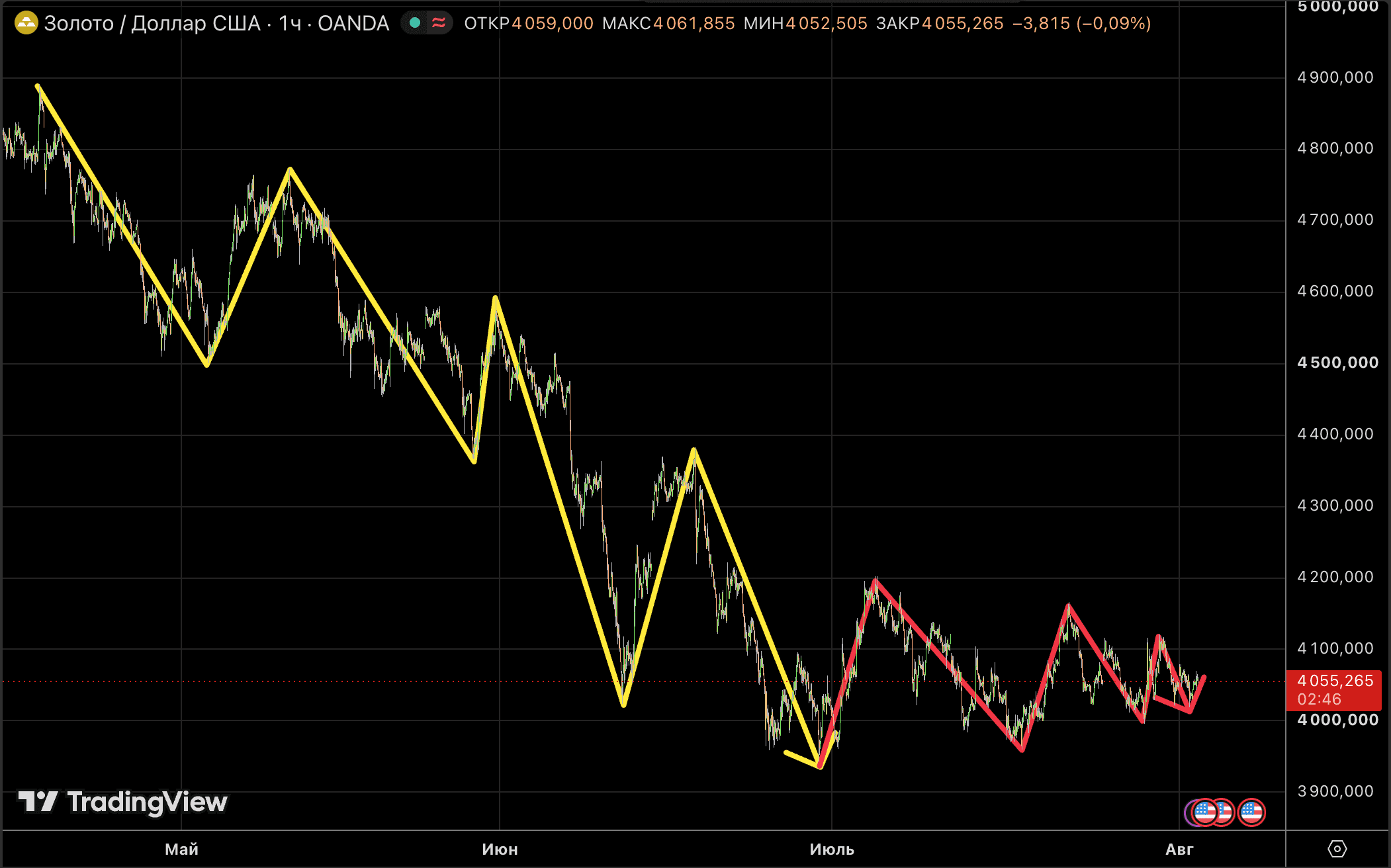
🔍 What We See on This Chart
This chart is a good example of that situation.
After an extended downtrend, price has stopped making convincing new lows. At the same time, buyers have not yet managed to break above the highs created by previous corrective rallies.
To me, this signals only one thing - the market is currently in a state of uncertainty.
Ironically, this is exactly where many traders start trying to predict the next move. Personally, I believe that approach is more like guessing than systematic trading.
💭 Why I'm Not Rushing to Draw Conclusions
After years of trading, I've come to one simple conclusion: the market doesn't owe anyone anything.
It doesn't have to reverse simply because it has been falling for a long time. Likewise, it doesn't have to continue declining just because the previous trend was bearish.
The only thing I truly trust is price structure.
Price structure reveals who is actually in control of the market at any given moment.
✅ Conclusion
Looking at this chart, I don't yet see confirmation of either a continuation of the downtrend or a confirmed structural break that would signal a new uptrend.
In other words, the trend has stalled, but it's still too early to call it a reversal.
In my opinion, the better approach is to wait until the market clearly reveals its intentions.
If price resumes breaking previous lows, the downtrend remains intact.
If, however, price breaks above the highs formed during previous corrective moves, then we can start talking about a structural break and consider the possibility of a new trend emerging.
Over the years, I've noticed one consistent pattern: the highest-quality trades usually don't come from predicting what the market might do. They come after the market has already confirmed what it's actually doing.
That's why I prefer trading confirmation rather than expectation.