29 pieces
 Latest breakdownPairs Trading in Forex and Gold: How to Pick a PairPairs trading doesn't start with a chart, it starts with picking two instruments. I need a stable historical relationship between them, along with regular divergences: if a pair always moves in sync there's nothing to trade, and if the relationship breaks down for months, there's nothing to expect a reversion to the mean from.143
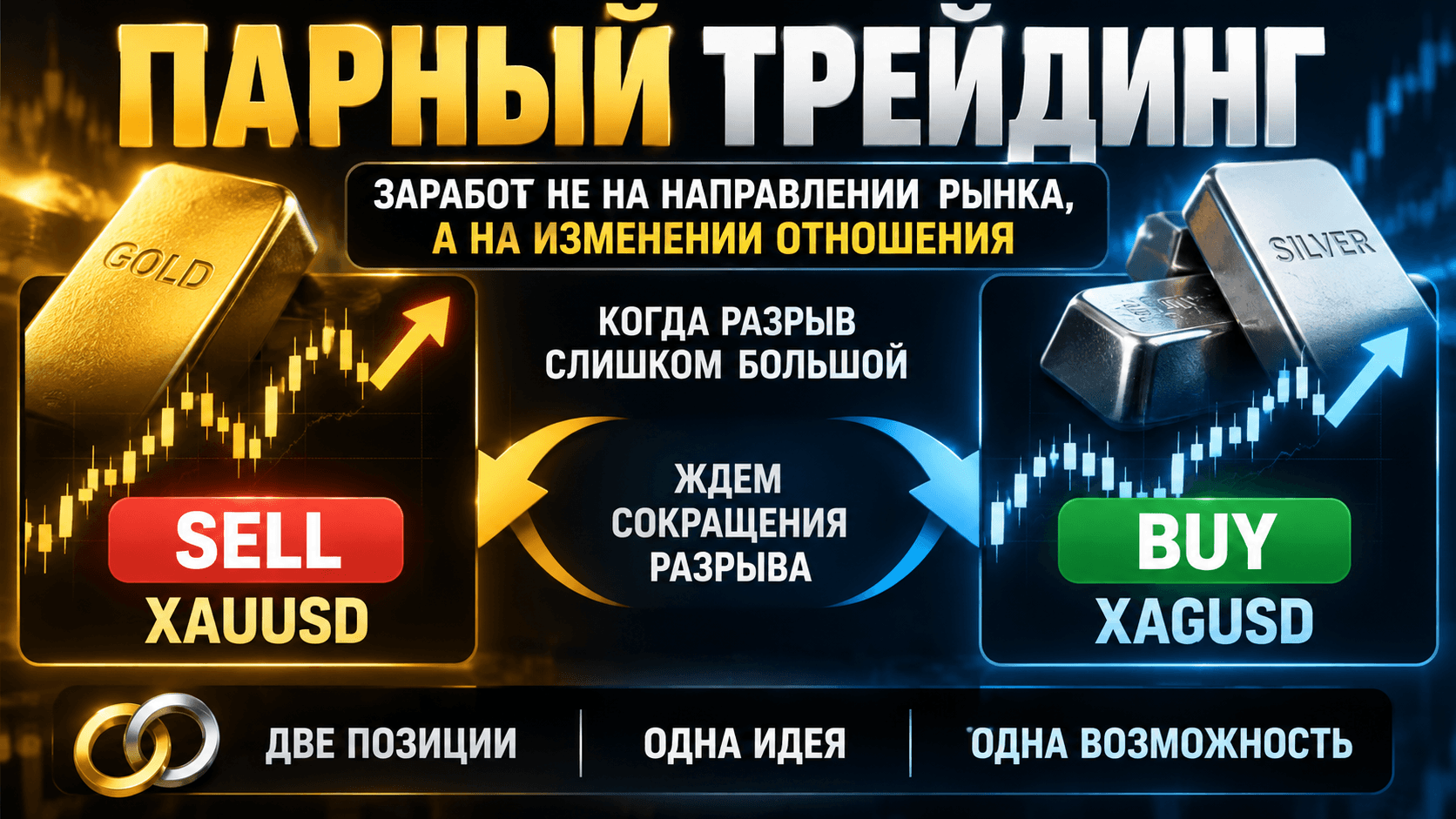 Pairs Trading: What It Is and How It WorksWhen I look at two instruments that usually move together, what interests me isn't where they're heading, but how far apart they've drifted from each other. That's the whole idea behind pairs trading.176
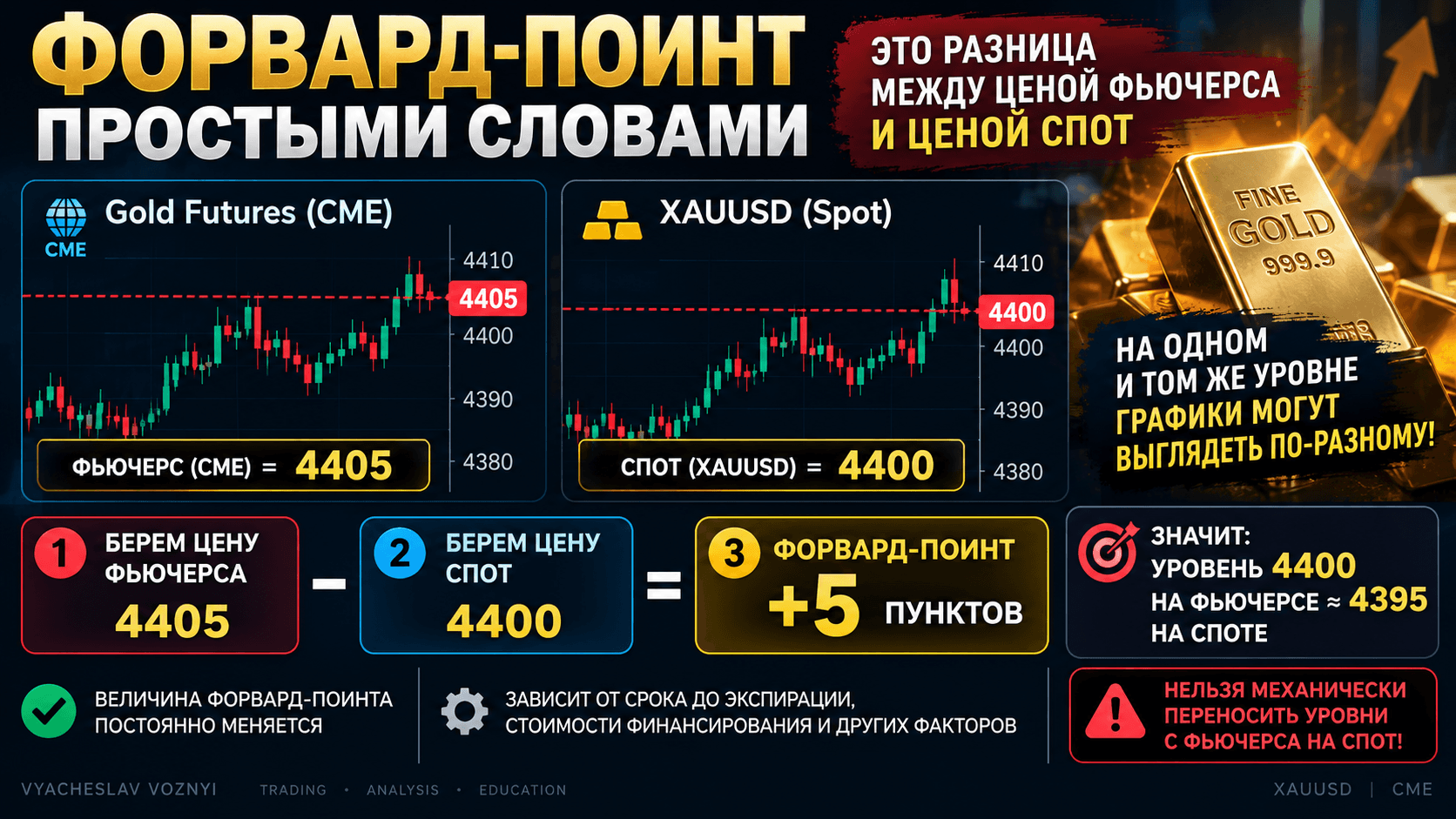 How to Transfer Levels from Gold Futures to SpotIf you're watching levels on the Gold Futures chart but trading XAUUSD, the numbers won't match. Not because there's an error in the data somewhere, but because these are two different instruments with different settlement dates. The gap between them is called the forward point, and you need to be able to calculate it quickly.110
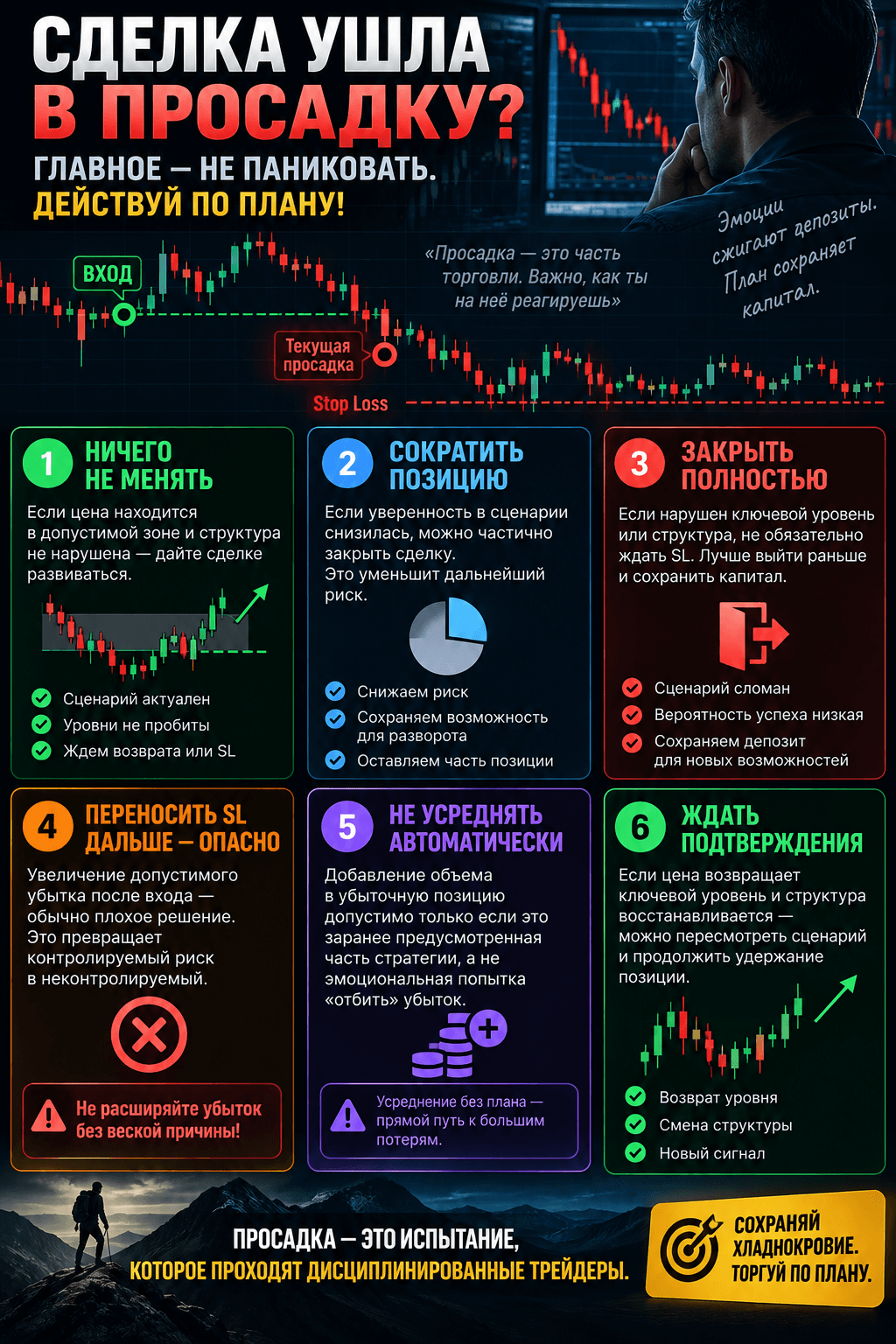 Drawdown on a Trade: Reduce or CloseThe most expensive mistake with a losing position is the urge to immediately do something about it. As long as price stays within the acceptable zone, being in the red isn't new information - it's just normal market behavior within the risk you already accepted. For me, the key thing here is separating the fact of a drawdown from the fact of a broken scenario.219
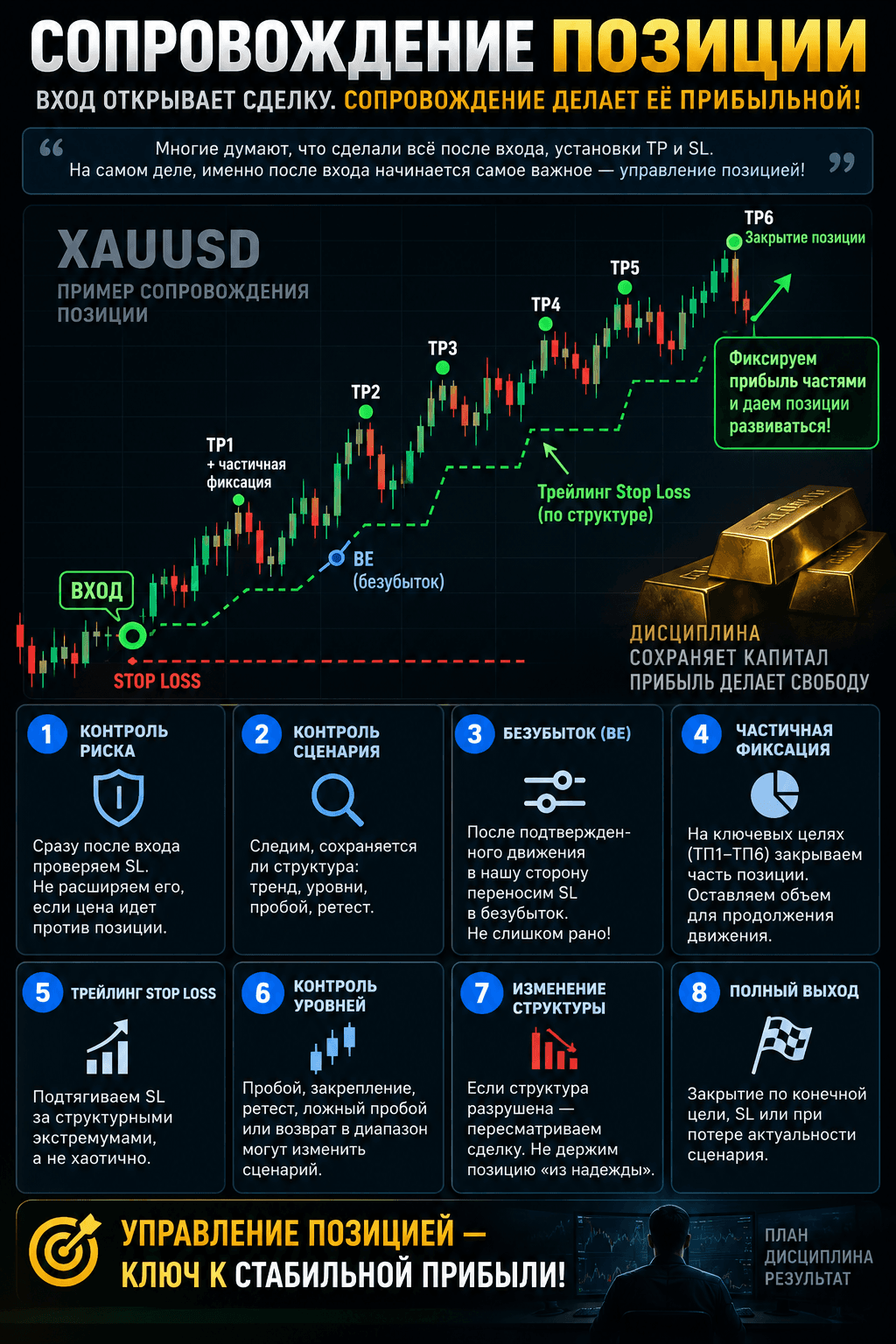 How to Manage an Open Position: 8 StepsMost people think a trade is done once it's placed: entry, Stop Loss, Take Profit, and the market handles the rest. For me, the most important part starts right after entry. Entry opens the trade, but management decides how much risk I keep and how much profit I actually capture.245
 False Breakout of a Level: How to Trade ItIf a large player can use a false breakout of a level for their own purposes - for example, to quickly build a position against the crowd - then trying to guess their moves in advance is a losing game from the start. We're on the other side of the order book and have no information about their plans. So what's needed is a criterion that doesn't depend on guesswork.295
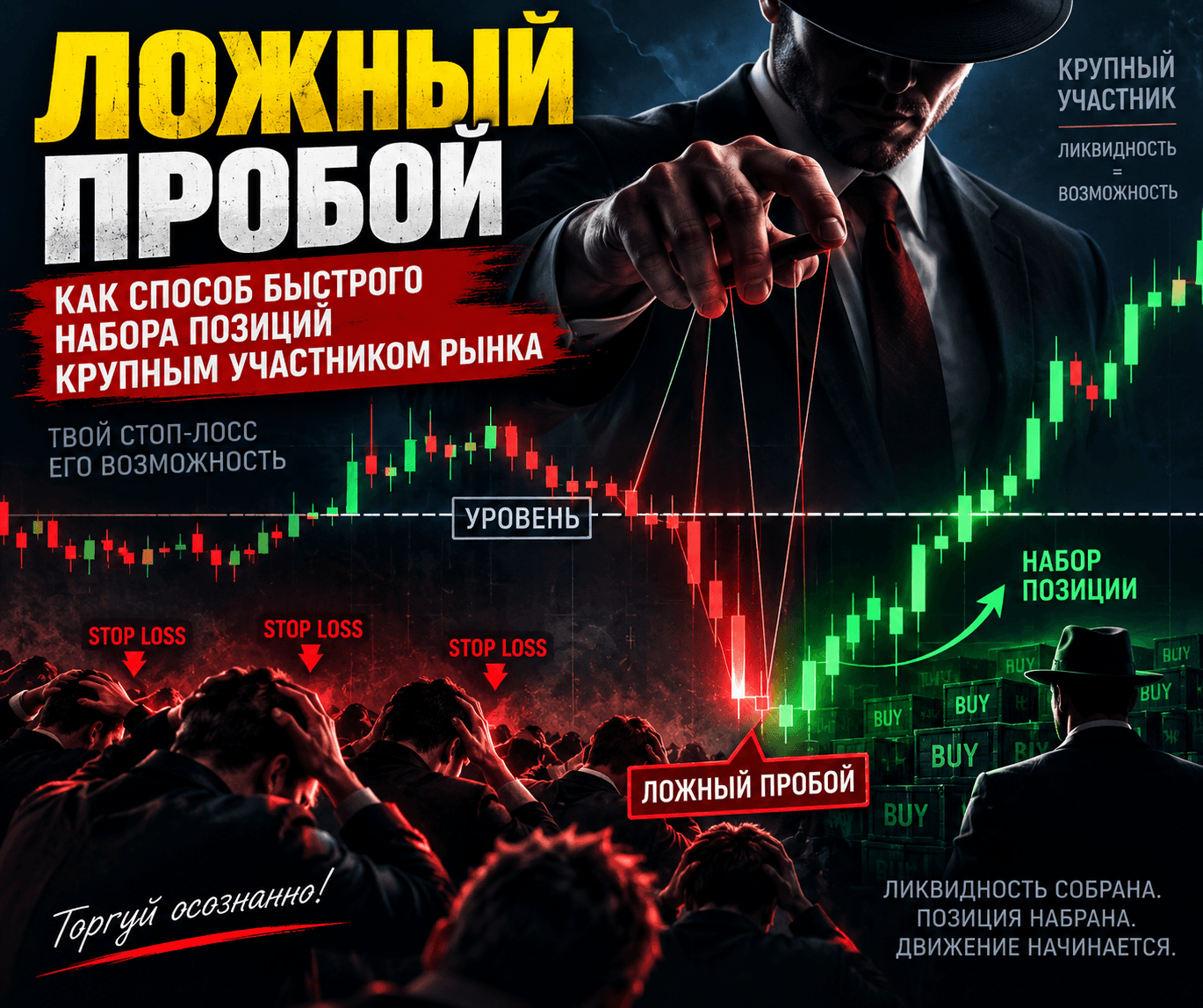 Why Big Players Need a FakeoutI don't read a fakeout as a market mistake, but as a working tool for building a position. Let me break down step by step why it's needed by someone entering with large size, and why liquidity always ends up sitting right behind the level that hasn't been touched yet.184
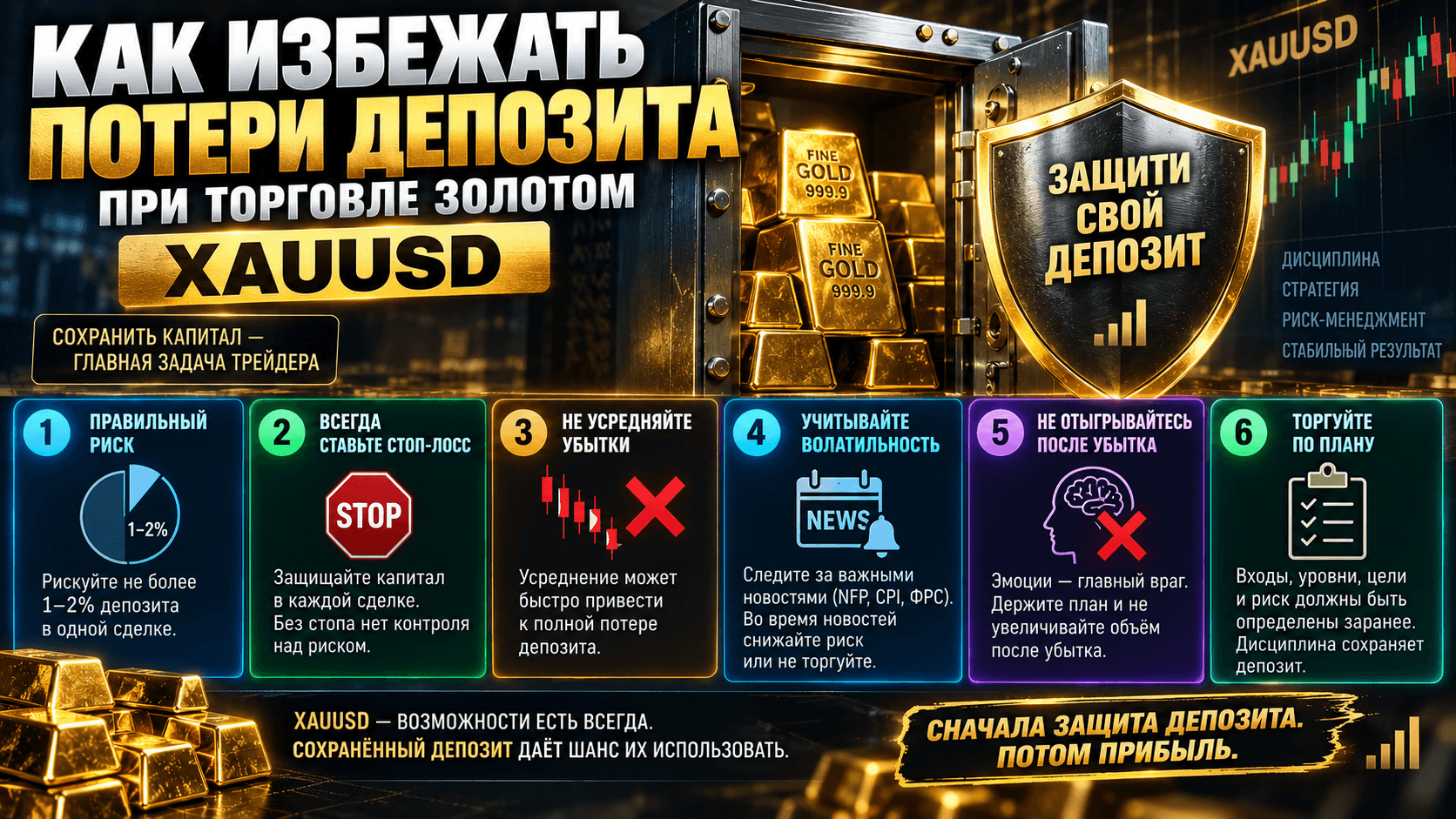 How to Avoid Blowing Your Account Trading GoldGold delivers the kind of moves people come to it for. But those same moves have a flip side: an account that grew for a month can get wiped out in one evening. Below are the rules that work for me as a filter before every entry.210
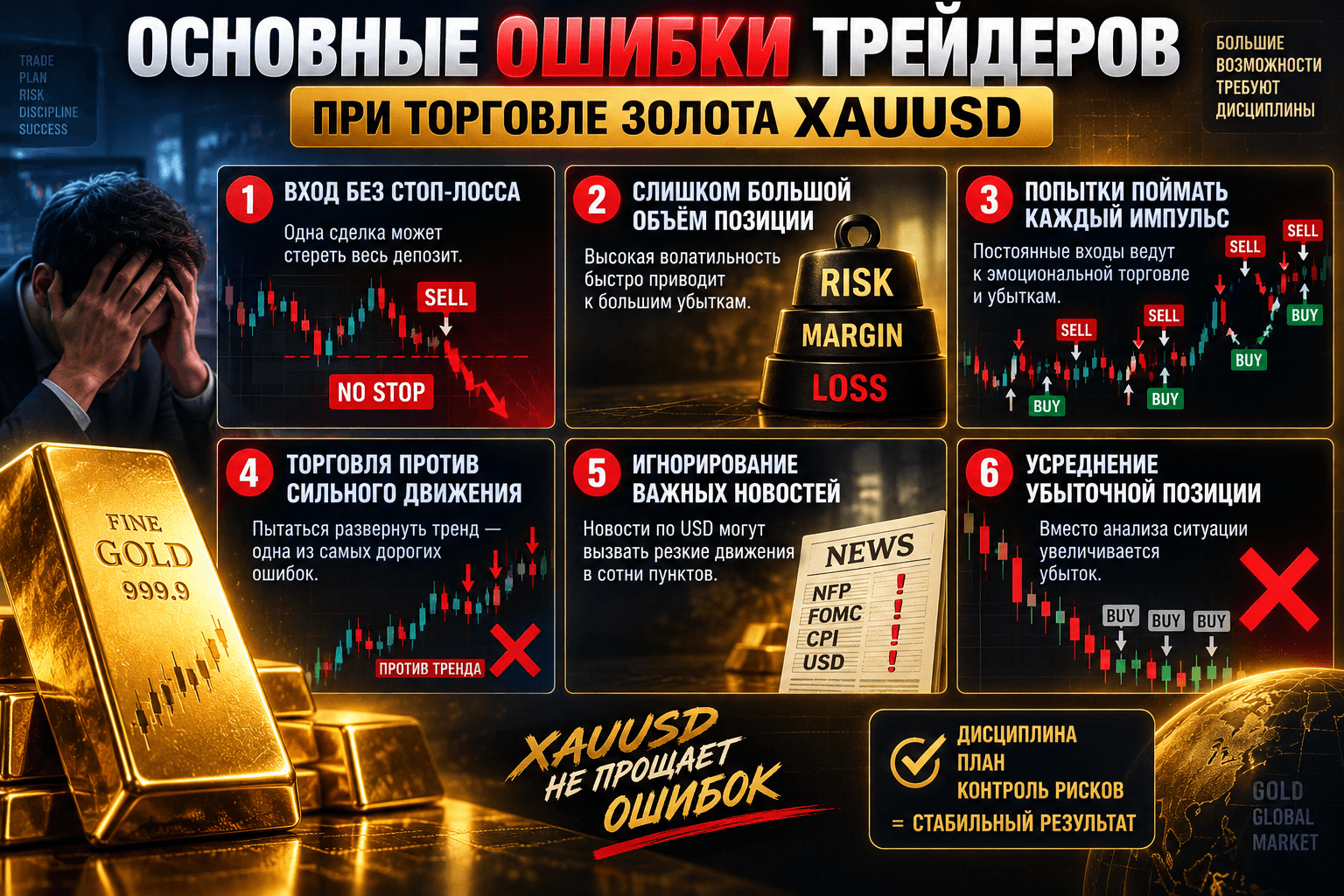 Why Your XAUUSD Gold Account Gets Blown OutGold doesn't forgive chaotic trading. The instrument delivers strong moves, but it makes you pay for them with range: what looks like noise on other pairs becomes a full-blown move against your position here. Here are the mistakes I run into most often.214
 Why Beginners Trade Gold XAUUSD and Lose MoneyGold is almost always moving, and that's the first thing a beginner notices: big candles, long impulses, trends that run for days. From that comes a simple, almost universal conclusion: if it moves a lot, it must be easier to profit from. The problem is that an account grows and falls by the same rules in both directions, and a bigger amplitude cuts both ways.253
 Iceberg Orders: How Big Players Build PositionsWhen I say "iceberg," I don't mean a candlestick pattern you can circle on a chart, but the logic behind how big money operates. The name stuck because of the obvious analogy: the tip sticks out above the water, while the bulk of the mass is hidden beneath it.143
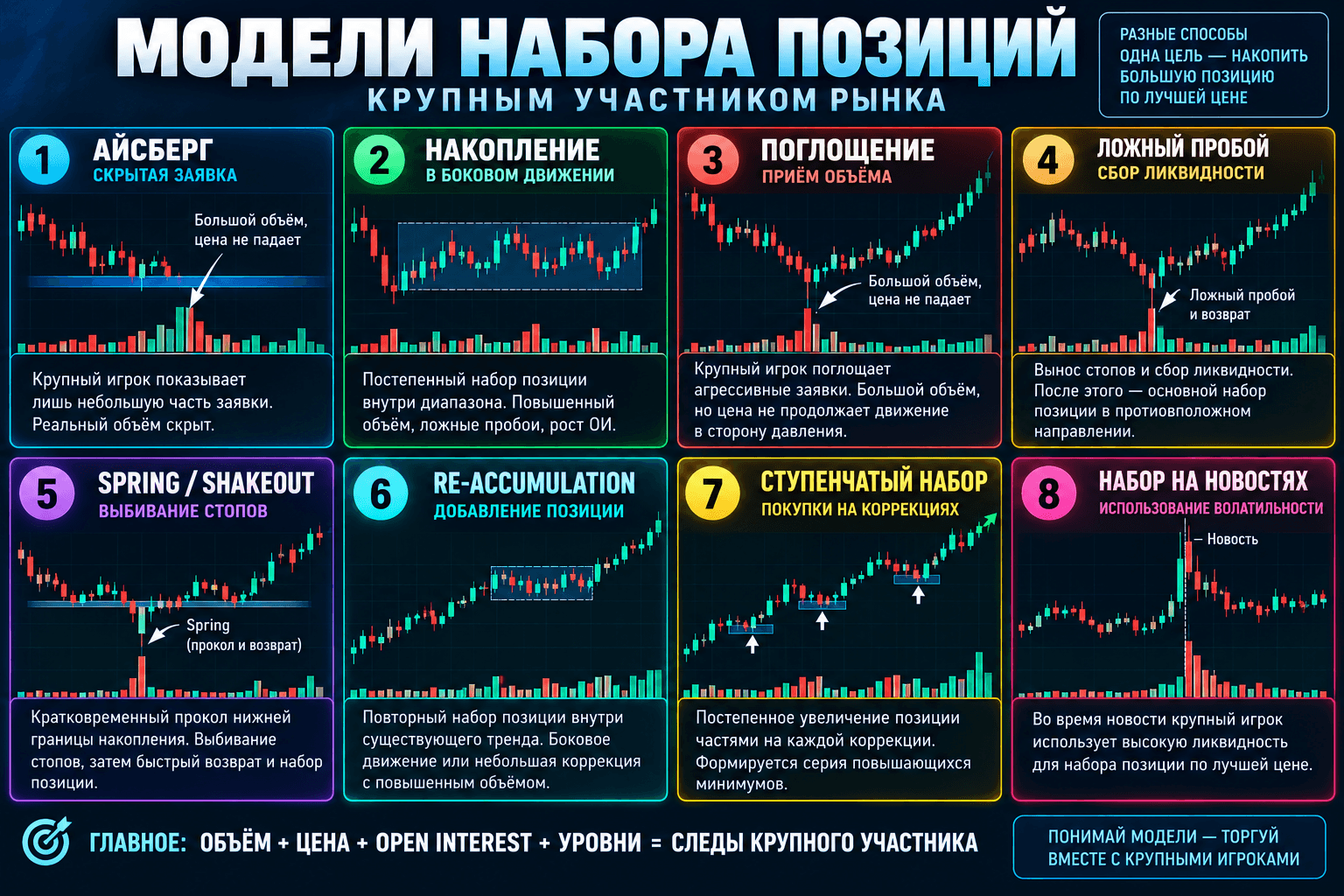 How to Spot Large Players Building a PositionA large position can't be built with a single click - the market simply won't offer that much liquidity at the price you want. So building a position always stretches out over time and gets disguised as ordinary trading. Below I break down the patterns I use to spot it, and the combination of data I look at on CME.225
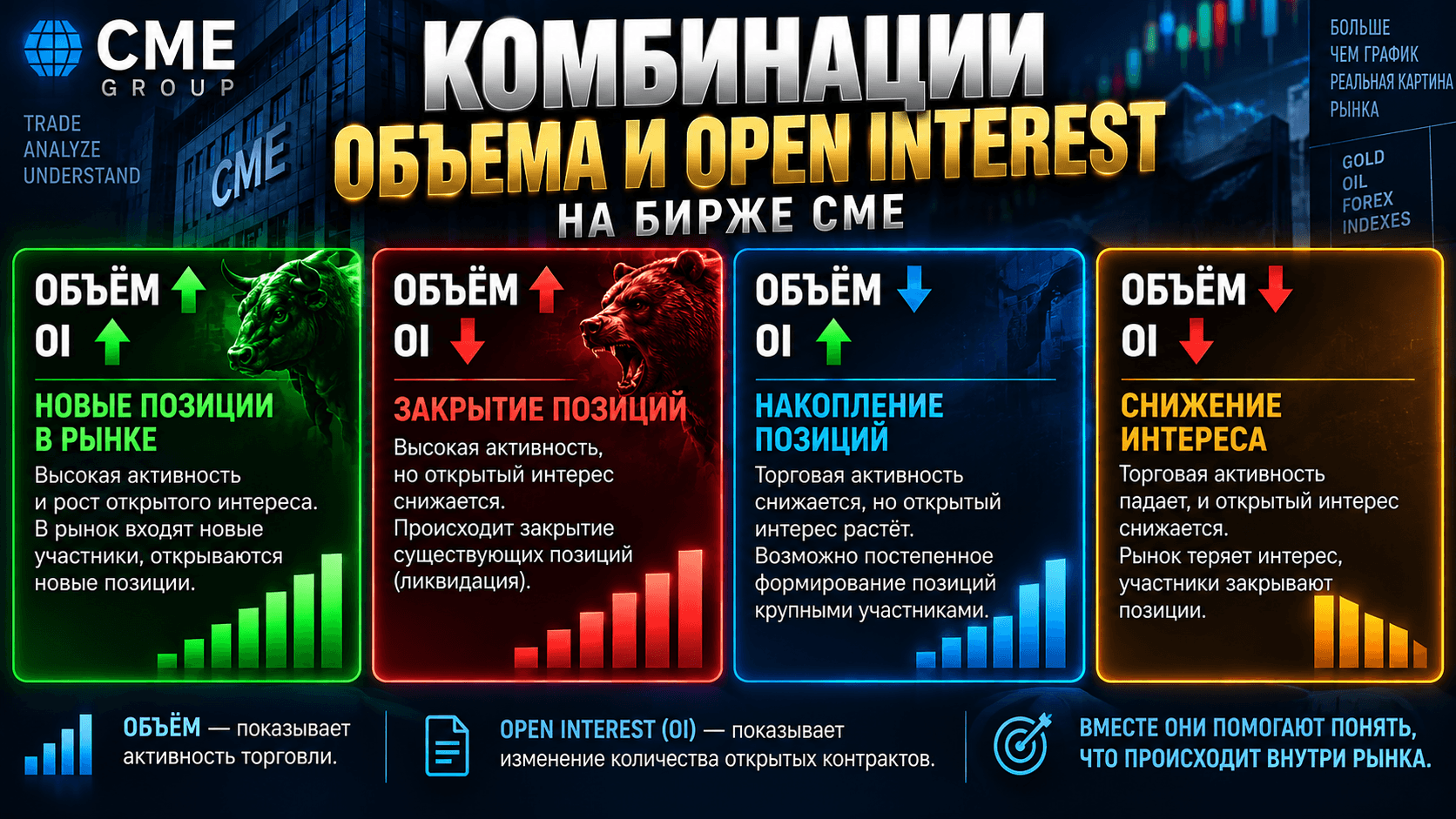 Gold Volume and Open Interest: How to Read ThemOn the gold futures at CME I've got two numbers pointing in different directions. Volume tells me how many contracts changed hands during the session. Open interest tells me how many contracts remained open after it. A trade can open a new position, close an old one, or simply pass one from hand to hand - and that difference is what OI shows and volume doesn't.283
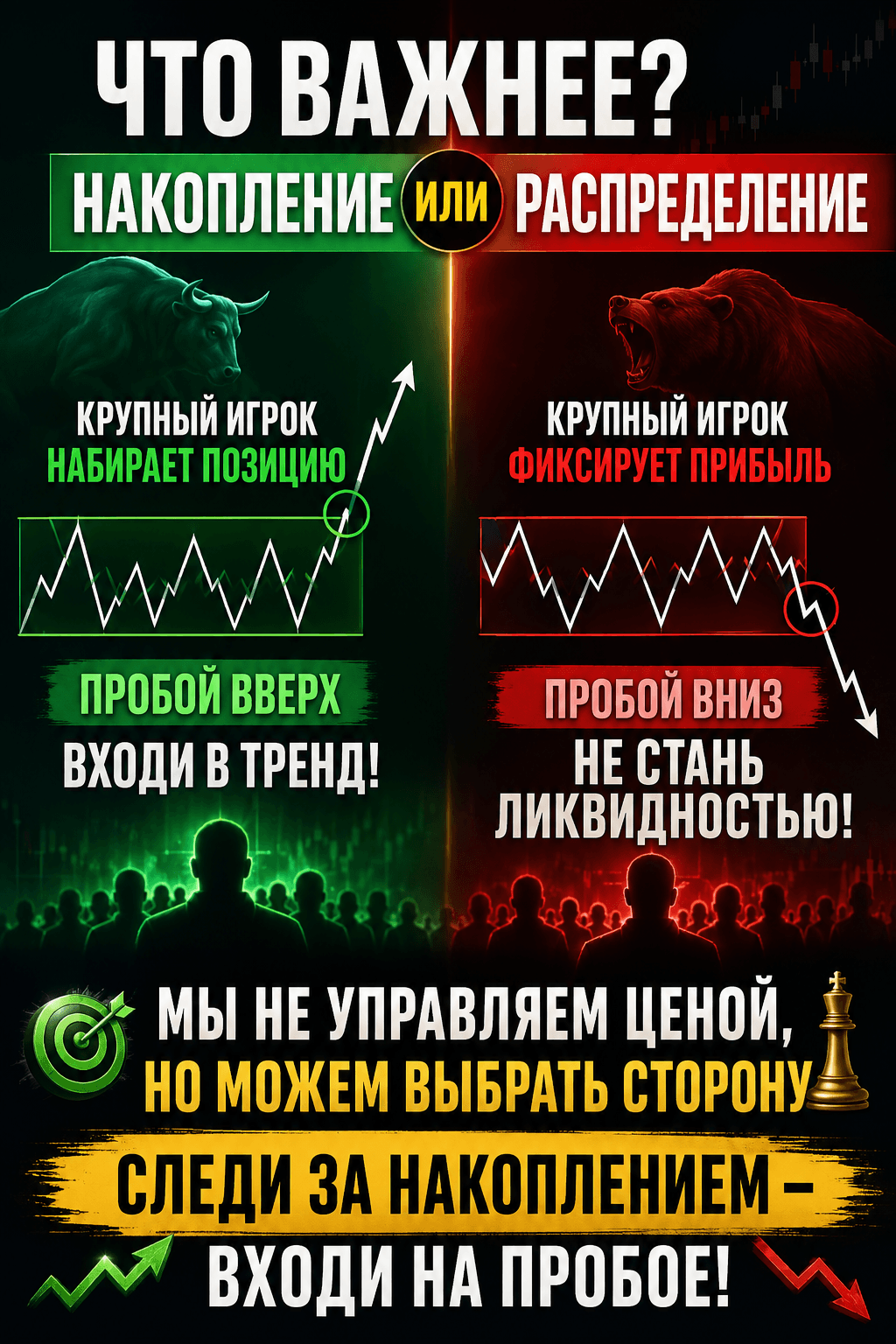 Accumulation or Distribution: Which Matters MoreWe don't move the price, we join positions already built by big players. That's why the question of where to enter - in a trend or on a breakout from an accumulation zone - isn't theoretical for me. It's about where in the move my entry actually lands.225
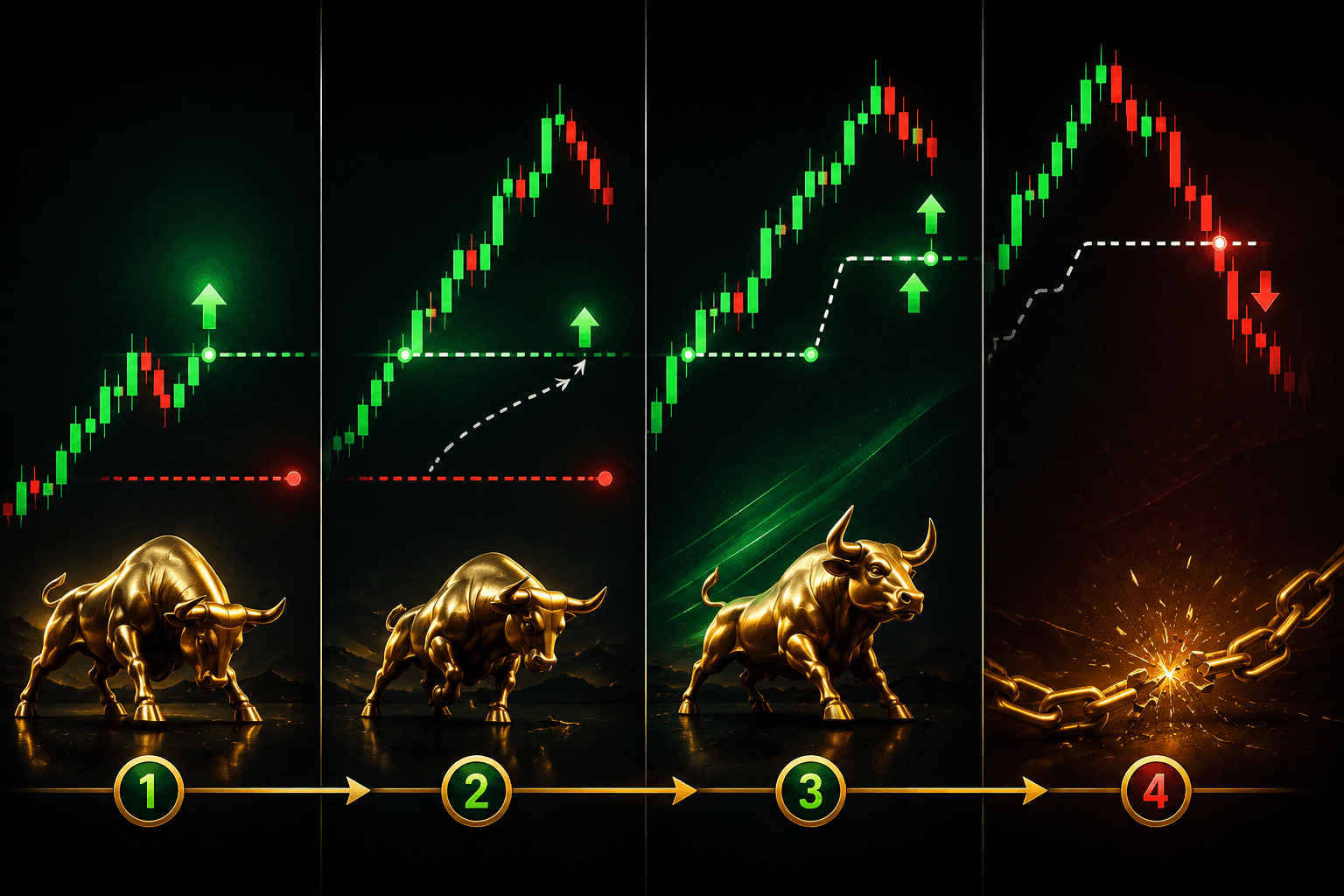 What Is a Trailing Stop and How Does It WorkA trailing stop is a stop-loss that automatically moves along with the price while a trade is going your way. You set a trailing distance, and the stop follows every new price extreme, keeping that same gap. As soon as the price reverses by the set distance, the position closes.247
 What Is Liquidity in Trading, Explained SimplyLiquidity is a property of the market that shows how easily you can buy or sell a large volume without a sharp price move. In simple terms, it's the market's ability to absorb trades. Not a reserve of money, not the total sitting in participants' accounts, but the readiness of the other side to accept your order at a close price.272
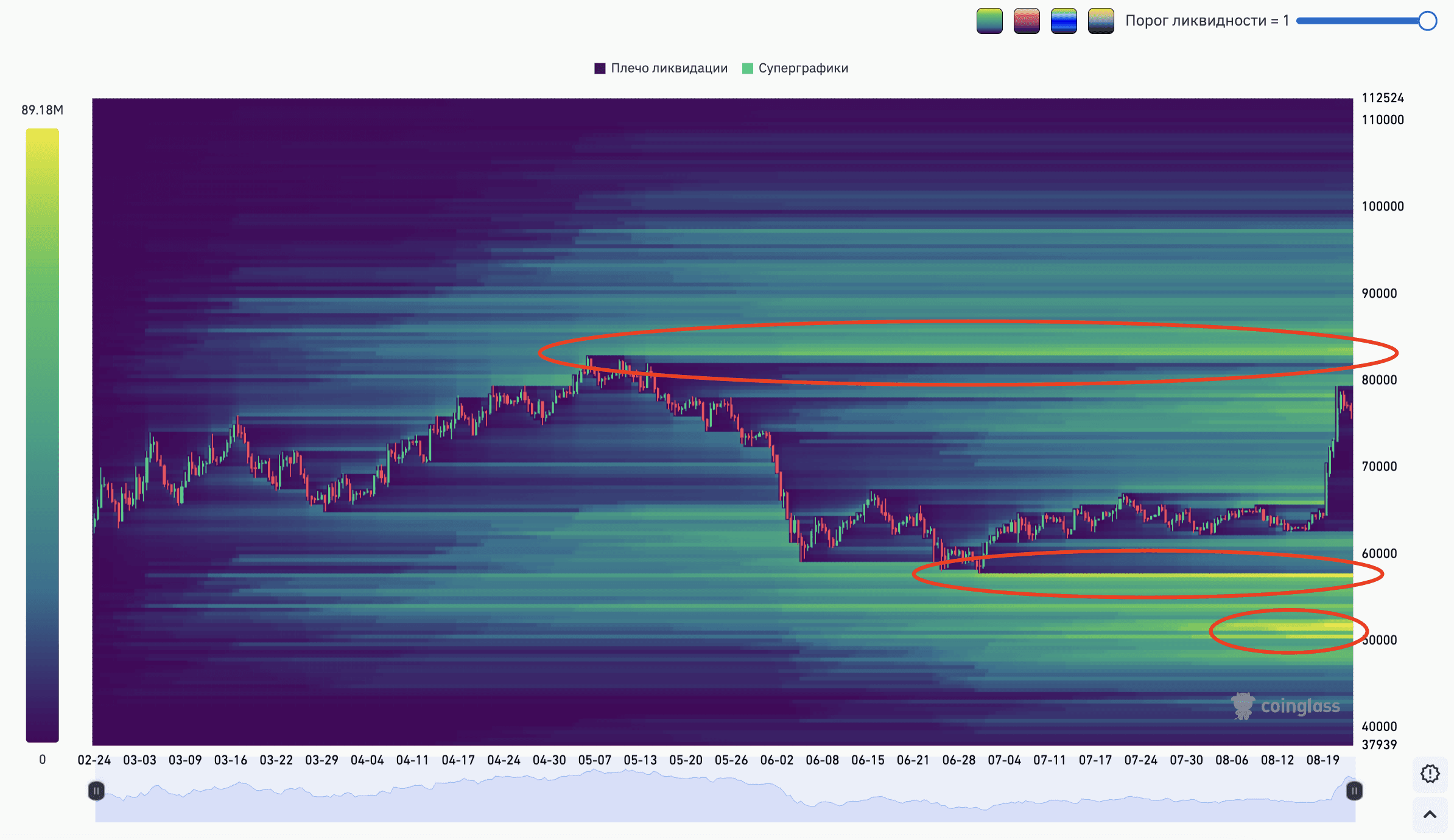 Liquidation Map and Structural AnalysisI never read the liquidation map separately from structure. On its own, it only shows clusters of leveraged positions - it's structural analysis that gives these clusters meaning, by showing where large players are sitting and which points on the chart matter for them.419
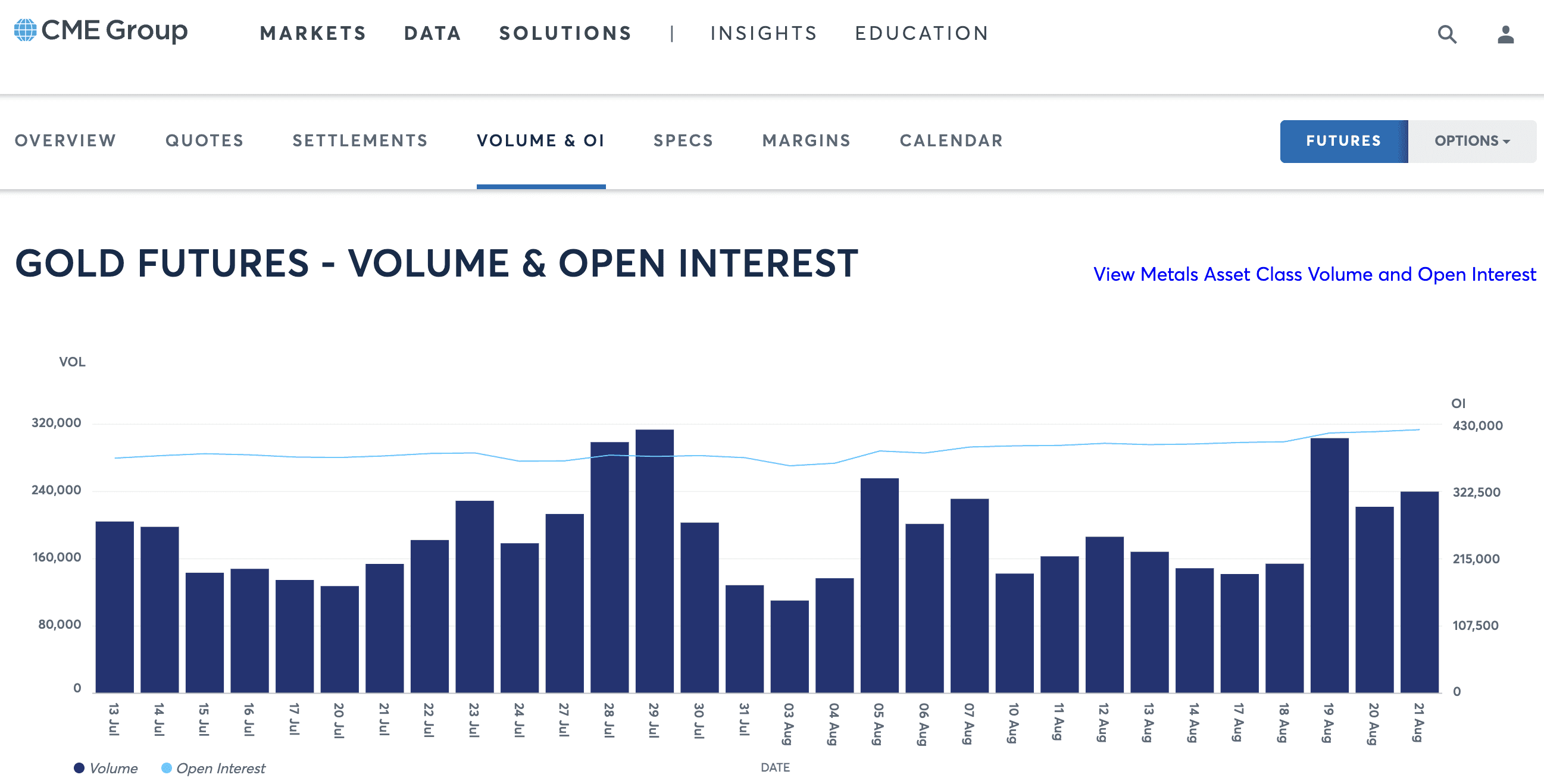 Rising Gold Open Interest: What It Means for the TrendI look at gold not just through candles, but through CME data too. Since early August, the picture there has been consistent: price rises, and open interest rises right along with it. To me that's a separate argument the candlestick chart alone can't give.290
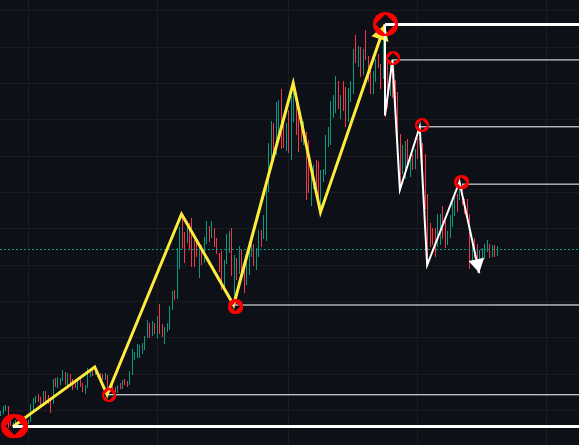 How to Properly Scale a Trading ChartI treat chart scale not as a matter of convenience but as part of the analysis itself. How much history fits into the window determines whether I see the targets of a move or just stare at a chunk of candles with nothing to go on.317
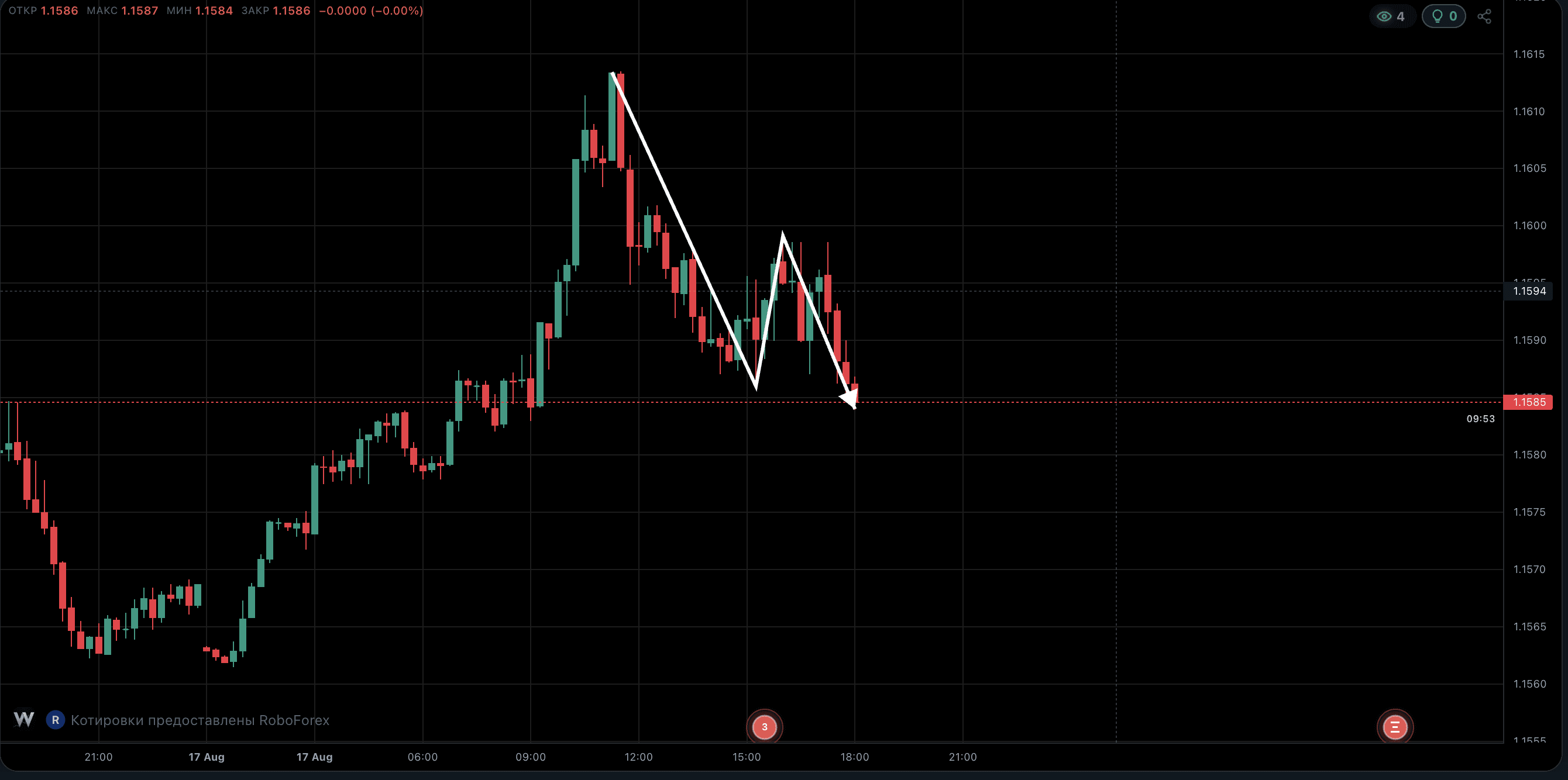 How to Spot a Trend on a Chart: Three MovesThe word "trend" gets slapped on almost any rally or drop, and that's where the confusion starts, right at the most basic level. On the chart the difference is visible with the naked eye, no indicators needed: you just have to tell a simple move apart from a complex one.294
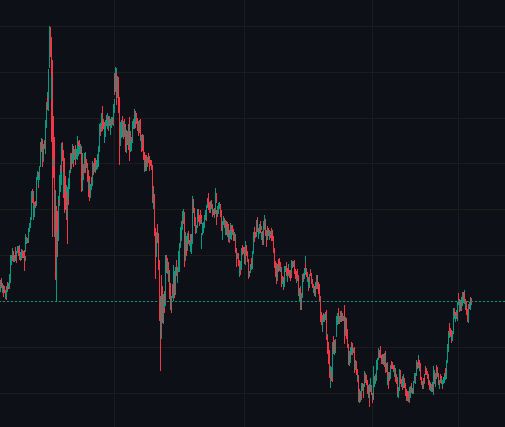 M1 vs D1: Where Big Players Really Show UpВопрос звучит просто: где искать мелких участников, а где крупных - на минутке или на дневке? Ответ не такой прямой, как хочется, но логика распределения активности по таймфреймам вполне читаемая.401
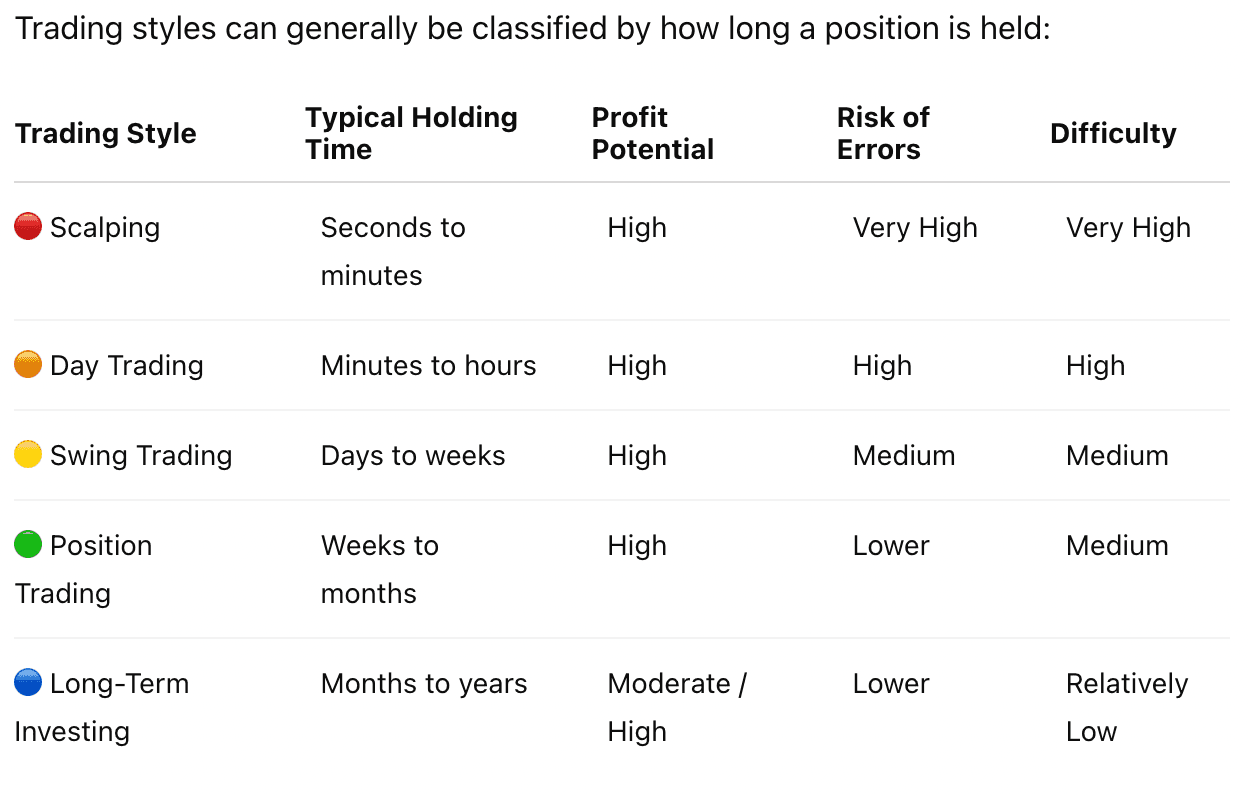 Which Trading Style Is More Profitable: Scalping or Position Trading?When choosing a trading style, traders often ask themselves: which type of trading can generate more profit, and which one is more likely to lead to significant losses?109
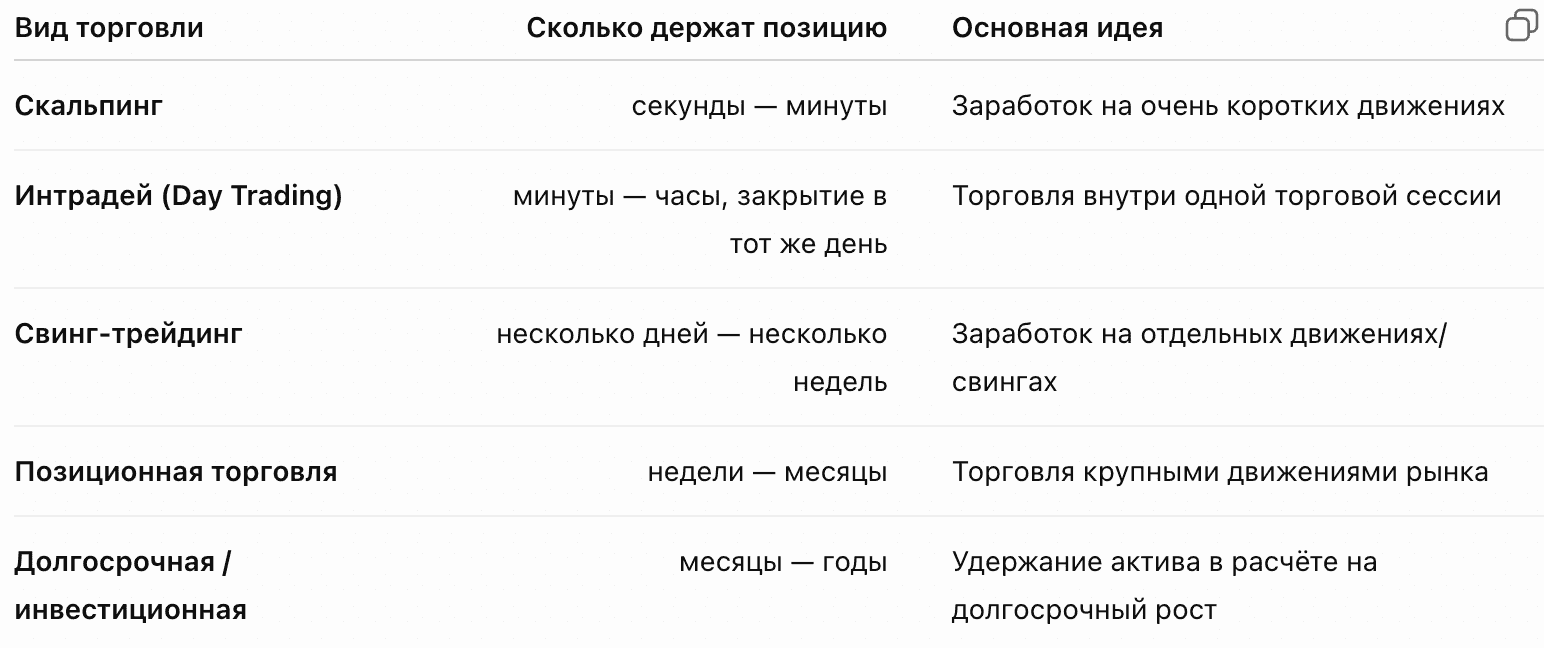 Types of Trading: From Scalping to Long-Term InvestingTrading in financial markets can be classified in several different ways. One of the simplest approaches is to classify trading based on how long a position is held.57
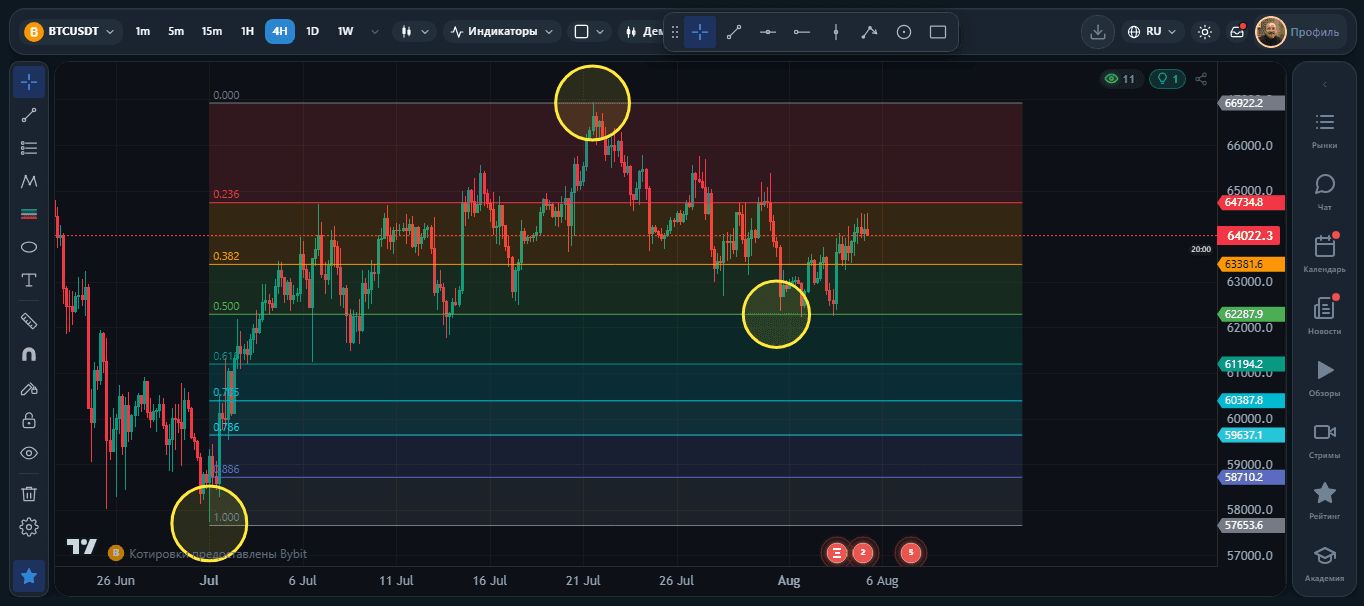 Levels 0%, 50%, and 100% - How to Identify Key Market Levels on Gold (XauUsd) and Any Other Chart 📈Even if you're not yet familiar with technical analysis, this information is easy to understand and can be extremely useful. You don't need to master dozens of indicators or complicated trading strategies to start reading the market. Sometimes, understanding just a few key price levels is enough.86
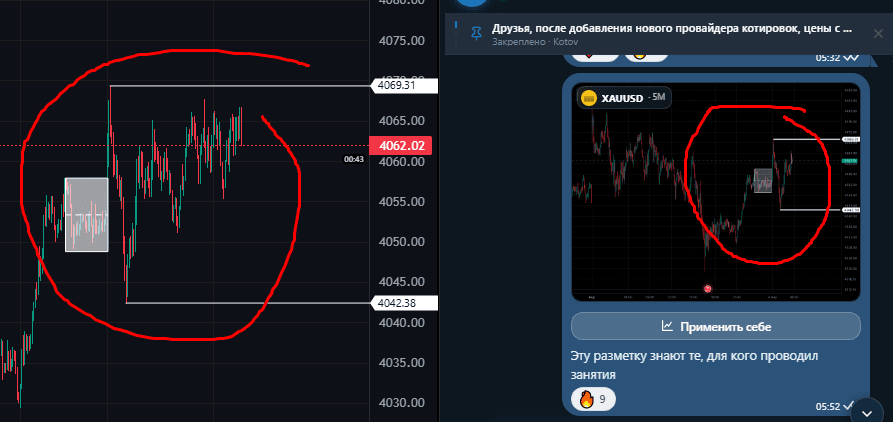 Why Understanding Market Logic Matters More Than Predicting Price 📈Many traders try to predict where the market will move in the next minute, hour, or day. As a result, decisions are often driven by emotions, and trades are opened only after the main move has already taken place.66
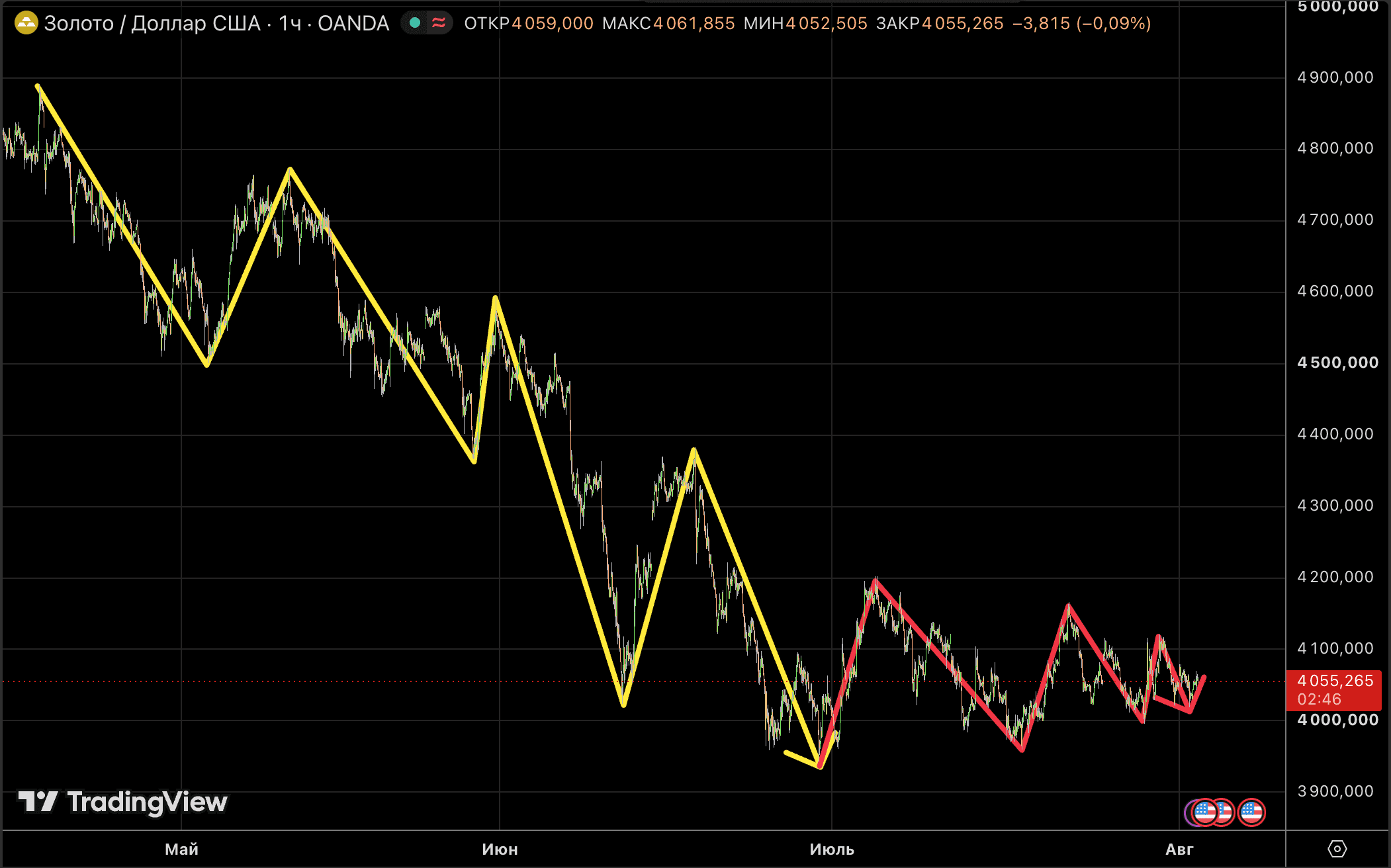 The Trend Has Stalled. But That Doesn't Mean It's ReversingMost traders try to spot a reversal long before it actually happens. In my opinion, this is one of the most common reasons traders lose money. The moment price starts slowing down, many immediately look for trades against the prevailing trend, even though the market hasn't provided any real evidence that the trend has ended.72
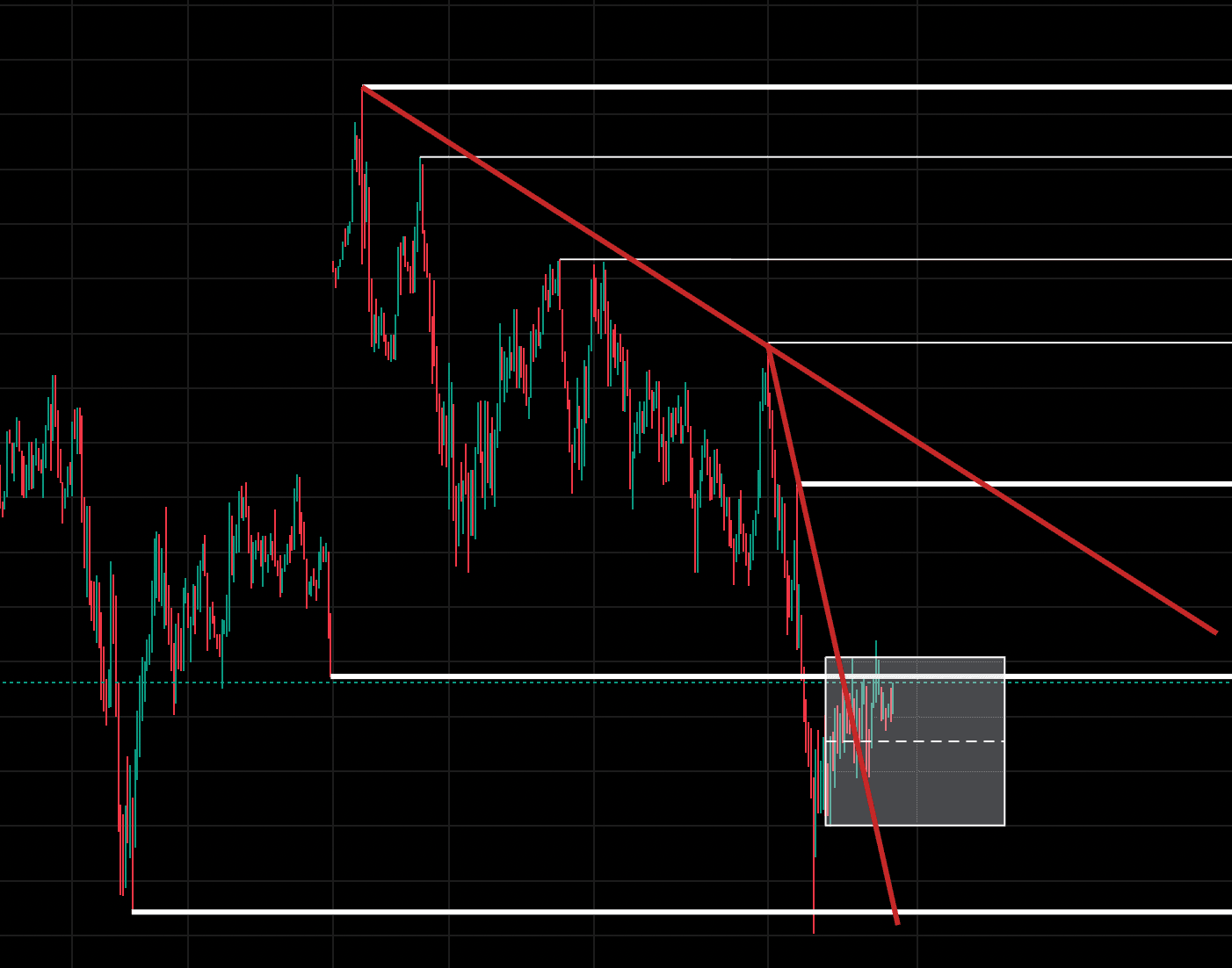 The Only 3 Tools You Need for Technical and Market Structure AnalysisMany new traders believe they need dozens of indicators, colorful lines, and complicated tools to analyze the market. Before long, their charts look like Christmas trees, overloaded with information that only creates confusion.55
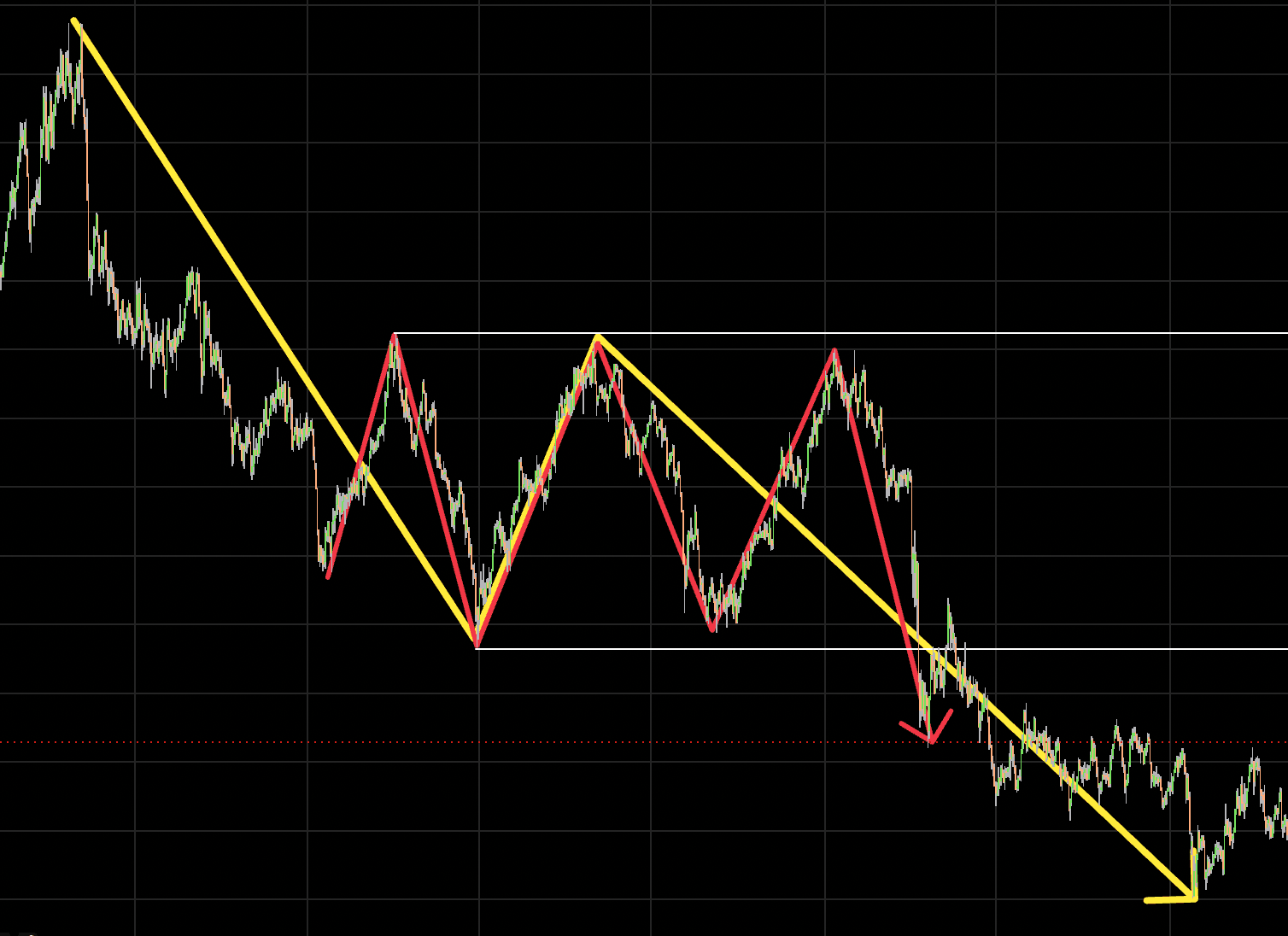 The accumulation phase — the most important element of market analysis**Why most traders read accumulation wrong**71
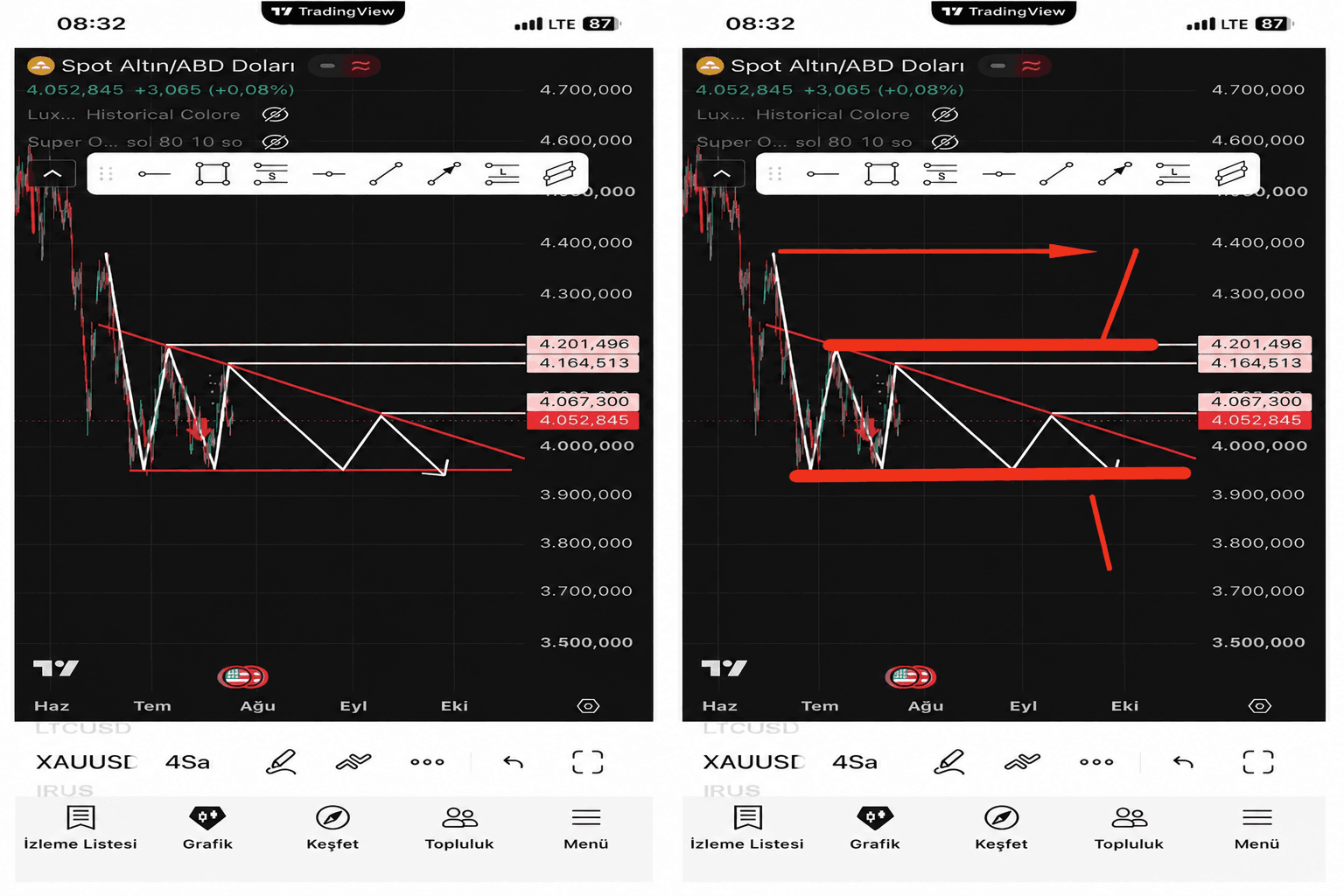 Seeing a pattern on the chart isn't enough. You need to know how to use it. Gold (XAUUSD)Colleagues, I want to raise an interesting topic for discussion, using gold (XAUUSD) as the example.38